

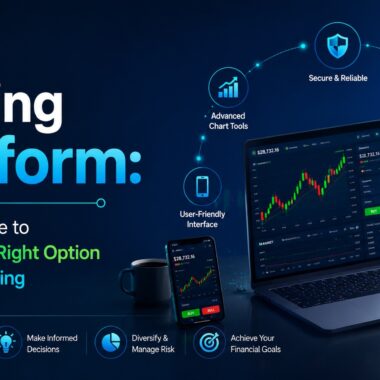
People searching for a dabba trading platform may be looking for easy access to market prices, a simple interface, or a way to understand short-term trading. However, a platform’s appearance does not prove that it is authorised, and an app showing market prices does not necessarily mean that a customer’s orders are executed on a recognised stock exchange. Before comparing any service, it is important to understand what dabba trading means, and how to verify a legitimate financial intermediary.
What is a dabba trading platform?
Dabba trading generally refers to an arrangement in which an operator records a customer’s market-linked position privately and settles the result internally instead of executing the transaction through an authorised exchange mechanism. Prices may be linked to public market movements, but the customer may not receive the normal records and protections associated with a regulated trade. SEBI describes dabba trading and unregulated in India. It should not be confused with trading through a registered broker on a recognised exchange.
Why people search for the best dabba trading platform in India
Search phrases such as best dabba trading platform in India appear because people compare services, fees, leverage, speed, and ease of use. But a popular keyword is not evidence that an operator or dependable. Promotional pages may use words such as “best,” “trusted,” or “number one” without providing independent proof. A polished website, attractive dashboard, customer testimonial, or referral offer cannot establish that a service has regulatory approval. The first question should be whether the intermediary is authorised and how transactions are executed.
Understand the Challenges before making a decision
A major concern with an unauthorised arrangement is counterparty. The customer may depend on the operator to calculate a position and pay any balance. If a disagreement occurs, the customer may have difficulty verifying the trade or seeking help through the usual exchange-related complaint processes. Other possible concerns include unclear charges, delayed withdrawals, incomplete records, pressure to deposit additional money, and misleading profit displays. Promises of guaranteed returns or exceptionally high leverage should be treated as warning signs rather than benefits.
How to verify a trading service
Before opening an account, check the intermediary’s registration using official SEBI or recognised-exchange resources. Confirm that entity name matches the website, application, account documents, and payment details. Read the terms and conditions, charges,disclosures, and withdrawal rules. Ask how orders are routed and whether official trade confirmations and contract notes are provided. Use contact details from an independently verified official website rather than relying only on a phone number shared by an agent. Never share passwords or one-time passcodes with someone claiming to manage your account.
Questions worth asking before depositing money
Ask whether the business is registered, which entity will hold the account, what documents you will receive, how complaints are handled, and whether every fee is disclosed. Be cautious if someone asks you to send funds to a personal bank account, install an application from an unfamiliar website, or act immediately to access a supposed limited-time offer. A genuine-looking logo and positive review do not replace independent verification. If answers are vague or inconsistent, do not deposit money until you have checked the facts.
Safer ways to learn about the markets
If your goal is to understand financial markets, start by learning basic terms such as shares, indices, intraday trading, futures, options, margin, and settlement. Each product has different Challenges, and derivatives can be particularly complex. Educational material and paper-trading tools can help beginners practise without placing real-money trades. If you decide to trade, use a verified SEBI-registered intermediary and understand the possibility of loss. Avoid borrowing money for speculative trading or using funds needed for household expenses.
What responsible platform comparison looks like
For lawful market access, compare verifiable registration, transparent fees, official documentation, account security, customer support, and the clarity of disclosures. Reliability should be assessed using facts that can be independently checked, not only marketing claims. Keep copies of statements and confirmations, review transactions regularly, and use secure passwords. Do not assume that high margin, fast account opening, or a promise of easy profits means that a service is suitable for you.
Conclusion
A dabba trading platform should not be evaluated only by its interface or promotional promises. The phrase best dabba trading platform in India may be used in search queries, but no ranking can turn an unauthorised service into a regulated one. Dabba trading and unregulated in India, so readers should avoid such arrangements and verify any financial intermediary through official sources. Education, careful checks, and regulated market access are more responsible starting points than claims of quick profits.








Pingback: Online Dabba Trading in India: Meaning, Challenges and Important Facts
Pingback: Online Dabba Trading: Key Challenges, Common Myths and Safer Market Practices