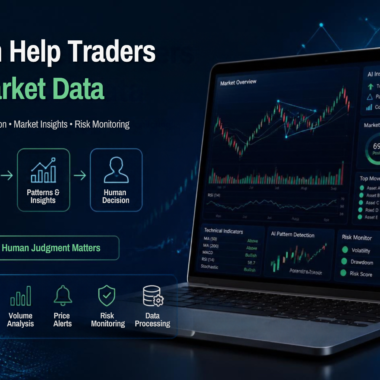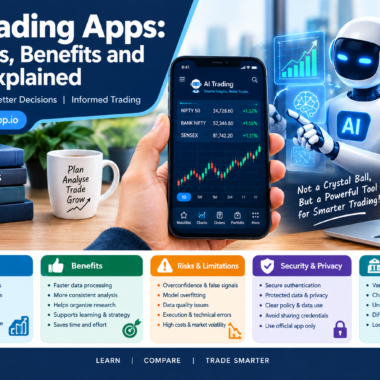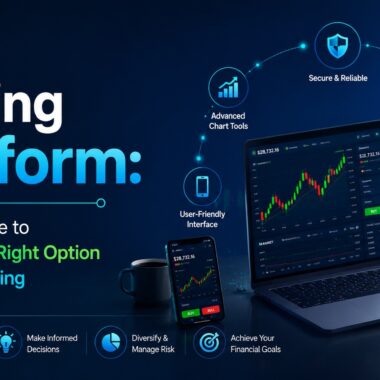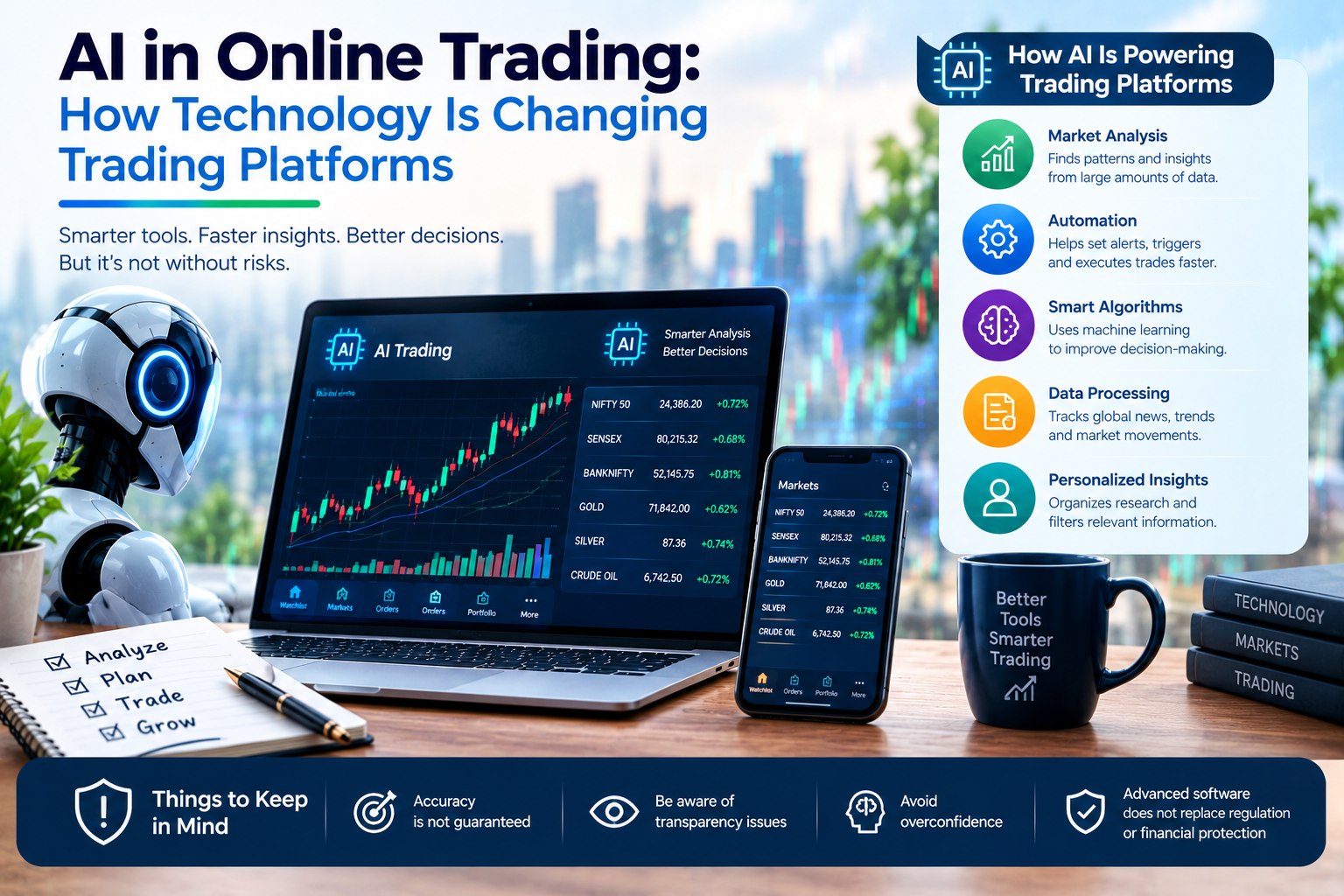
AI in Online Trading platforms are moving beyond simple price screens. Machine learning, automation and data processing can now help users filter information, monitor markets and organize research. The change is significant because financial markets produce more data than an individual can comfortably examine manually. Yet technology also introduces new questions about accuracy, transparency and overconfidence. Anyone considering a dabba trading platform should understand that advanced software does not automatically provide regulatory or financial protection.
From manual charts to intelligent interfaces
Traditional platforms mainly provided charts, quotes and order-entry tools. Newer systems can analyze patterns, rank securities, generate alerts and summarize large data sets. Natural-language tools can make financial information easier to explore, while automated workflows can monitor selected conditions without constant manual observation.
These developments can improve efficiency, but they also create a temptation to treat a model’s output as a final answer. An algorithm works from its data and assumptions. When those inputs are incomplete or market conditions shift, its conclusion can become unreliable.
Pattern recognition and screening
One useful application of AI is screening. Instead of reviewing hundreds of instruments manually, a system can identify assets that meet selected technical or quantitative conditions. It can also detect unusual volume or price behavior and bring those observations to the trader’s attention.
Screening is different from forecasting. Finding a historical pattern does not mean that the same outcome must occur next. Traders should examine the reasoning behind a signal and consider news, liquidity and broader market conditions before taking action.
Automation and order workflows
Automation can reduce repetitive tasks. For example, a platform may create alerts when a price crosses a level or prepare an order according to predefined rules. More advanced systems can connect several steps in a trading workflow.
Automation should always include safeguards. Incorrect settings, stale data or an unexpected market event can cause a strategy to behave differently from what the trader intended. Testing and position limits are therefore essential, particularly when leverage is involved.
Data quality is the foundation
AI cannot be more reliable than the information it receives. Price feeds, corporate data, economic calendars and alternative data can all contain delays, errors or gaps. Users should understand the source and timing of important information.
A platform should also explain whether AI-generated insights are educational, analytical or intended to trigger actual trading decisions. Clear labeling helps users avoid confusing an automated estimate with a guaranteed market prediction.
Technology does not remove legal risk
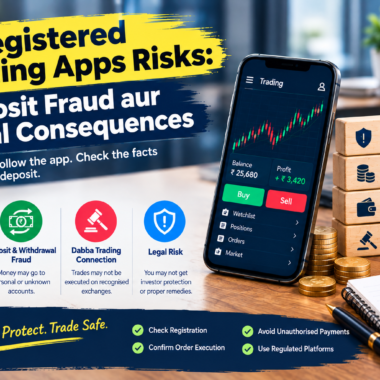
A sophisticated interface can look similar across regulated and unregulated services. This makes verification particularly important. A service described as a dabba trading platform may provide charts, order forms and mobile access while operating outside the protections associated with regulated exchanges and intermediaries.
Before using a service, check the operator’s identity, applicable registration, trading terms, settlement process, withdrawal rules and complaint mechanism. These structural questions matter more than whether the platform uses the latest AI terminology.
Human judgment remains important
Good trading decisions involve more than recognizing patterns. A trader needs a plan for position sizing, Risk Per Trade, diversification and exit conditions. AI can help organize information, but it cannot know the user’s financial circumstances or emotional response to a loss.
Using technology responsibly means asking what the model knows, what it may have missed and how much money is at risk if its assumption proves wrong.
Where AI is heading
The next generation of trading tools will likely focus on personalization, faster information retrieval and better integration of research with portfolio monitoring. These developments may reduce friction for experienced users and make complex data easier to navigate for newer participants.
At the same time, stronger transparency will be needed. Users should be able to understand important limitations rather than receiving an opaque score with no context.
Conclusion
AI is changing trading platforms by improving screening, automation and information management. It can make a trader’s workflow faster, but it cannot make markets certain. When evaluating claims about dabba trading in india, technology should be considered separately from regulation, settlement and investor protection.
A disciplined trader uses intelligent tools as assistants, verifies important information independently and keeps position risk within a level that can be tolerated even when an automated signal is wrong.
Keyword note: Readers comparing services should research dabba trading in india carefully, verify the operator’s identity and understand how orders, records, settlement and withdrawals are handled.
Keyword note: Readers comparing services should research dabba trading app carefully, verify the operator’s identity and understand how orders, records, settlement and withdrawals are handled.
Keyword note: Readers comparing services should research dabba trading app carefully, verify the operator’s identity and understand how orders, records, settlement and withdrawals are handled.
The role of a trading plan
Technology works best when it supports a predefined plan. Before a trade, write down the reason for entry, the level at which the idea is invalidated, the position size and the maximum amount you are willing to lose. After the trade, record the outcome without changing the original rules simply to explain a loss.
This process is particularly useful when automated tools are involved because it prevents a signal from becoming an emotional reason to trade. The platform supplies information; the trader remains responsible for the decision.
AI in Trading and automation are useful when their limitations are visible. Transparency should remain part of the product.
Users should also distinguish between information and execution. A chart can be accurate while the service displaying it is unsuitable for placing a real transaction. Review every important claim independently, especially claims involving regulation, returns, leverage and withdrawals. Taking additional time at the beginning is usually easier than trying to resolve a problem after money has already been transferred.